The artist
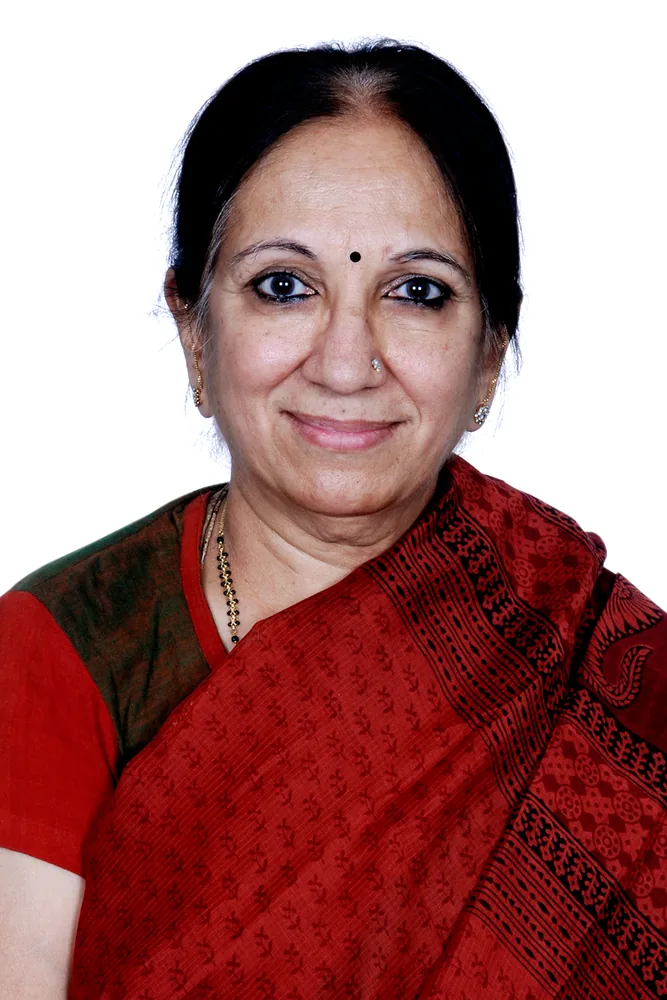
Jaishree Pankaj
Sanjhi artist, devotee of Shrinathji, grandmother of seven. For more than six decades, not a day without cutting paper.
Beside her grandfather
Jaishree was eight when she began. Her grandfather cut paper stencils on banana leaves to decorate the swing and the space before Lord Shrinathji: scenes of the Krishna Leela, Raas Leela and Govardhan Leela.
She helped him almost every other day, and it became the best part of her day. At school, her teachers would catch her cutting Sanjhi in class.
Sanjhi became my passion, my profession and my relaxation.
Scissors, not a brush
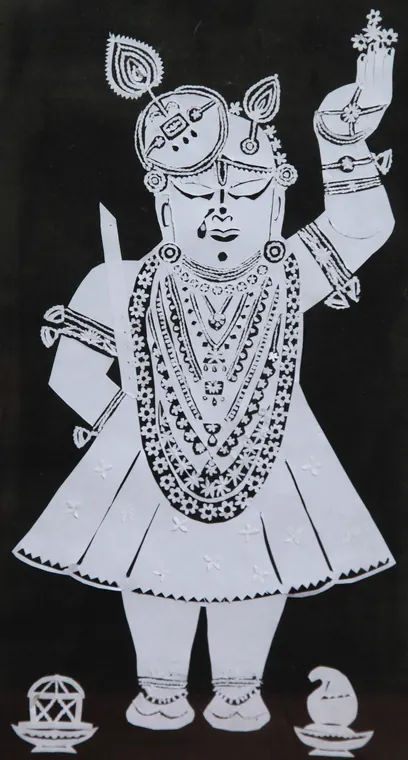
She says she cannot sketch or paint. The design forms in her mind, and she cuts it directly with a small pair of scissors, piece by piece. She can cut a peacock, her favourite motif, in a matter of seconds.
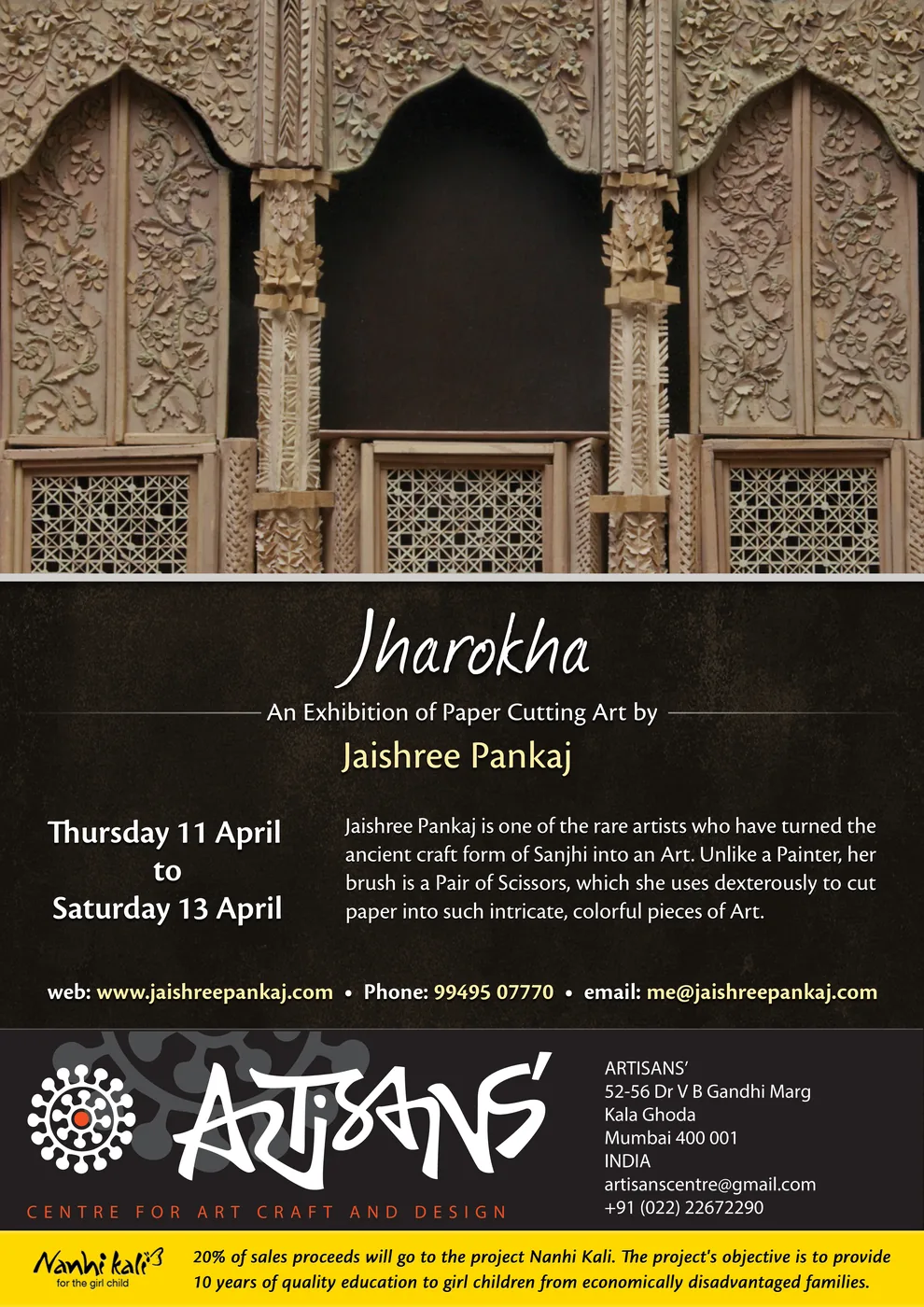
Visitors often refuse to believe her work is paper. Her havelis and jharokhas, inspired by travels through Jodhpur, Jaisalmer and Kutch, are built up in relief until they look like carved wood or stone.
When they get to know that it is made of paper, they refuse to believe.
A life of devotion
Born into the Vallabhkul, she has always made Shrinathji the centre of her work, and visits Nathdwara several times a year.
In 1993 she was invited to display a Sanjhi of sixty large panels of the Krishna Leela at the Shrinathji temple in Nathdwara. The temple also asked her to make an eight-foot silk pichwai for the Lord, which she calls the high point of her life.
Her subjects
What she cuts
Shrinathji & Krishna
The Lord in many shringars, and the leelas she heard as a child.
Havelis & jharokhas
Rajasthani and Gujarati façades, raised in relief for a 3D effect.
Peacocks & trees
Her favourite bird, in every size, and trees of life in paper lace.
Art traditions
Basohli, Kangra, Kishangarh and Kalamkari, Warli, Jamini Roy and even Van Gogh.
Family
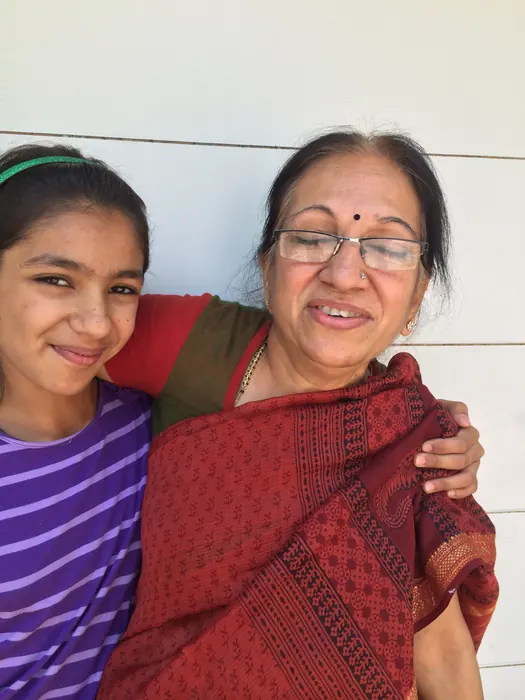
A mother of three and grandmother of seven, she raised her family while she cut through the quiet hours. Her sons later brought her work to Mumbai galleries.
Few people still practise Sanjhi this way, and it takes years to learn. She hopes one of her grandchildren will carry it on.
Exhibitions
Milestones
Solo shows in Hyderabad and Mumbai since 1977.
- 1950sLearns beside her grandfatherAged eight, she watches him cut stencils for Shrinathji’s swing.
- 1977First solo exhibitionKala Bhavan, Hyderabad. Opened by the Governor, Shri Divan.
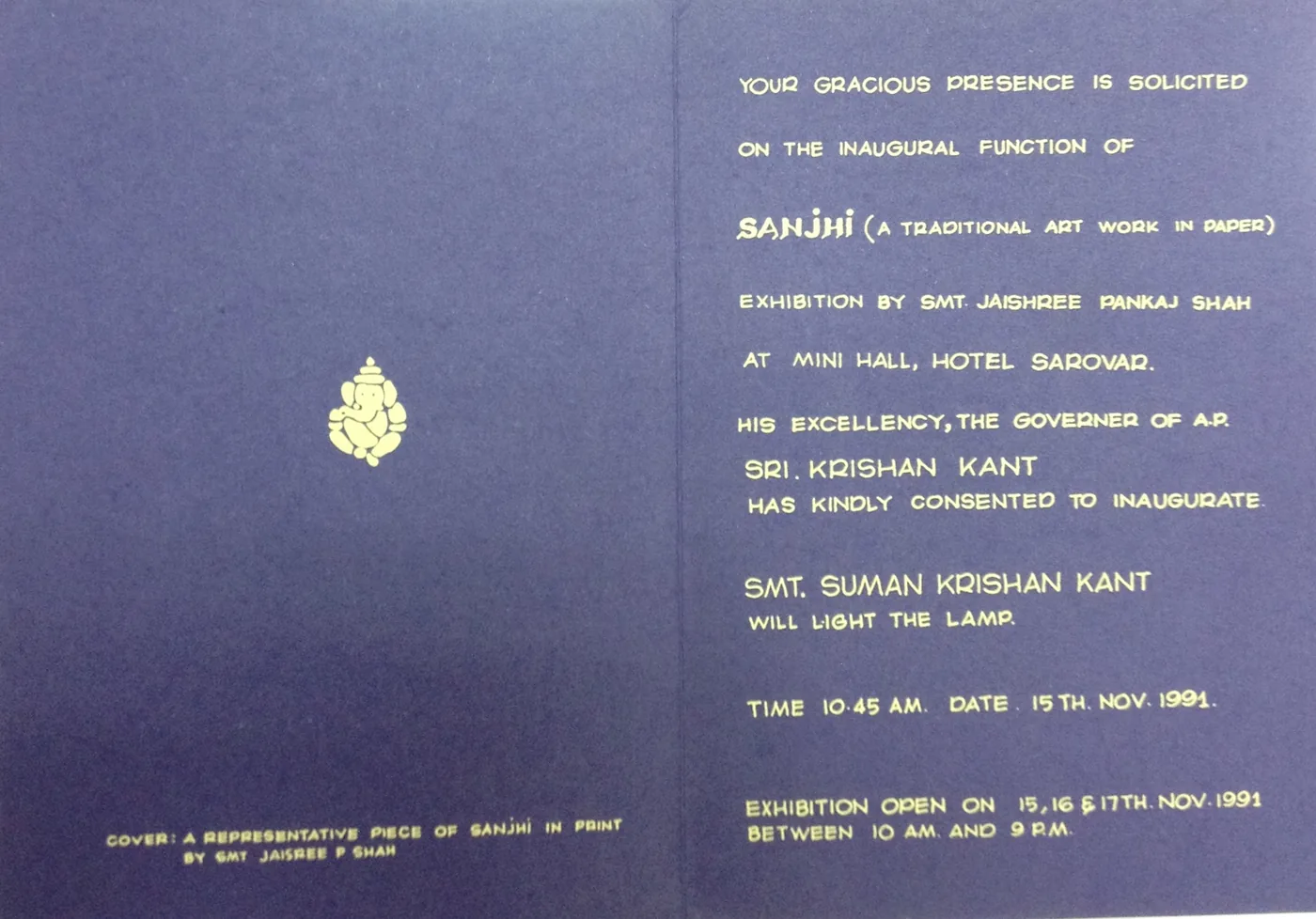
- 1991Hotel Sarovar, HyderabadOpened by the Governor, Shri Krishan Kant.
- 1993Sixty panels at NathdwaraInvited to display a Sanjhi of sixty large Krishna Leela panels at the Shrinathji temple.
- 1994Cymroza Art Gallery, MumbaiOpened by the artist Smt. B. Prabha. Her peacock appears on the cover of Chitralekha. Works go to the Ambani family and other collectors.
- 2000Kala Bhavan, HyderabadOpened by the Governor, Dr C. Rangarajan.
- 2013Jharokha, Artisans’, Mumbai55 works at Kala Ghoda, 11–13 April. About 20% of proceeds go to Nanhi Kali, for girls’ education.
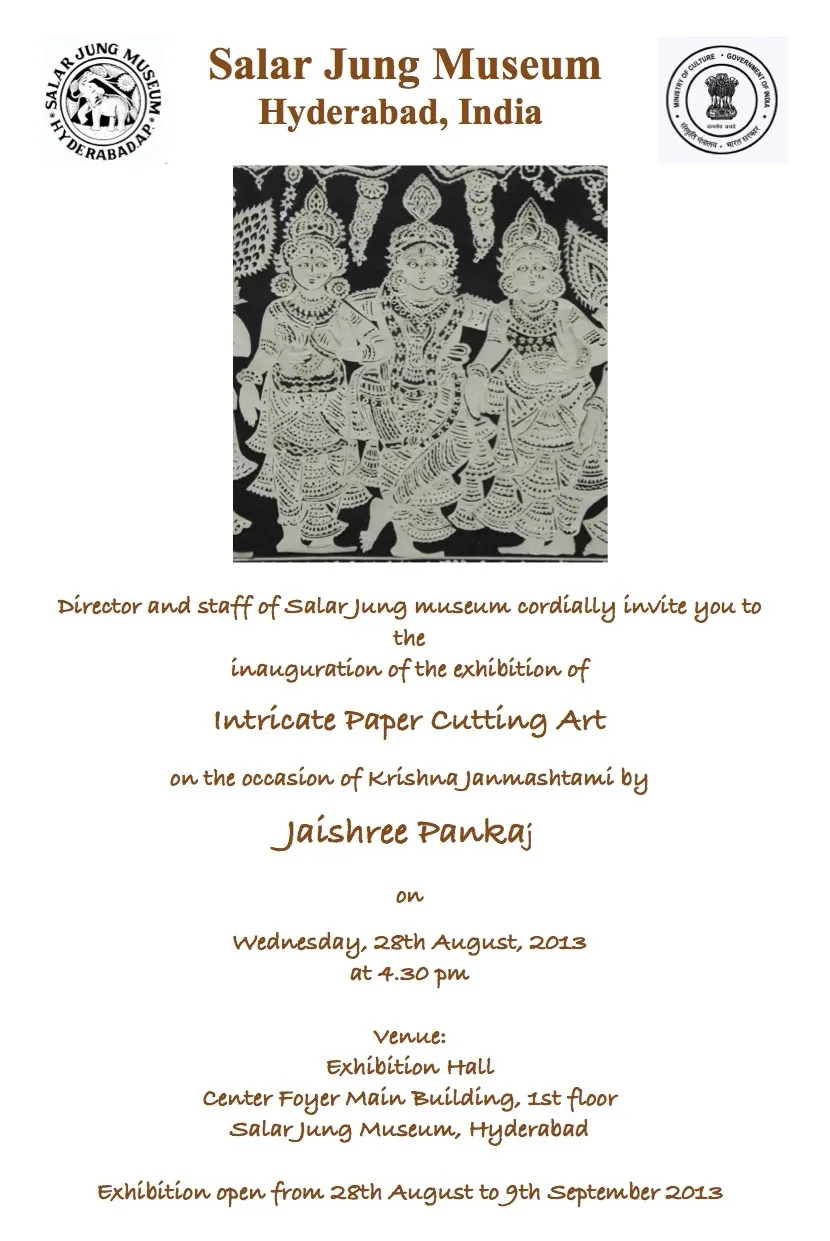
- 2013Salar Jung Museum, HyderabadOpened on Krishna Janmashtami, 28 August, and on view until 9 September.
- 2013Beyond Coffee, HyderabadNovember, Banjara Hills.
- 2014Cymroza Art Gallery, Mumbai22–25 May.
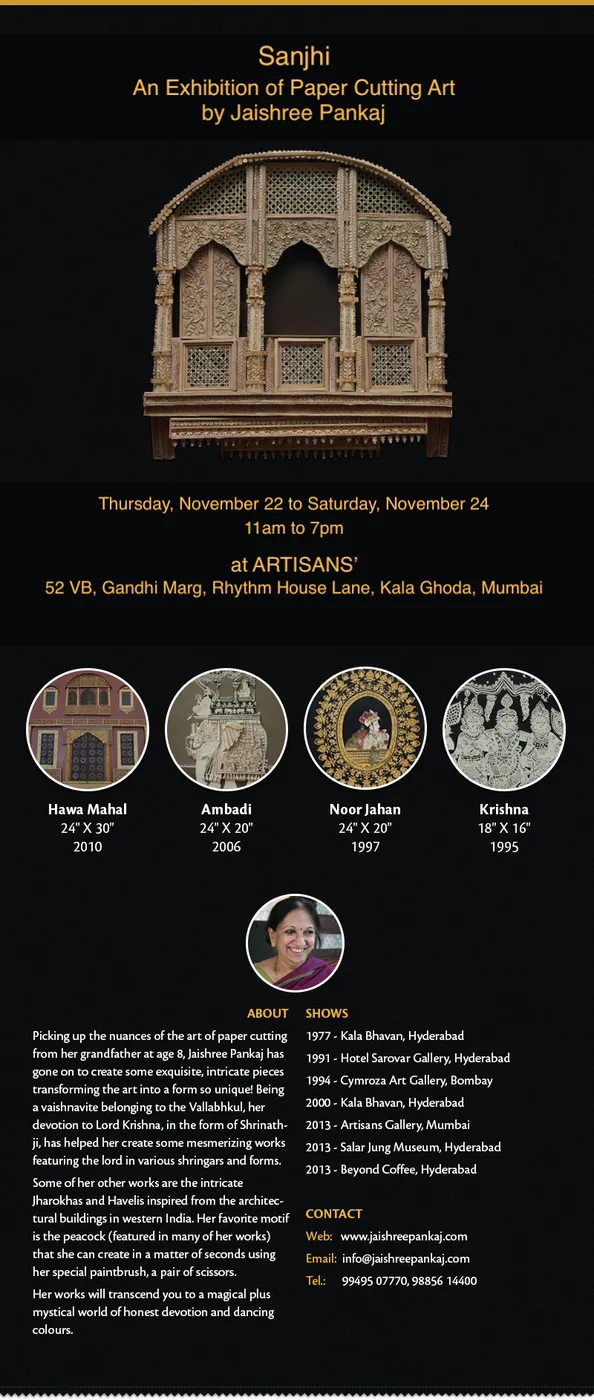
- 2018Sanjhi, Artisans’, MumbaiPanels, gift boxes and paper bonsai, 22–24 November. New work after Jamini Roy and Van Gogh.
- 2019Sanjhi exhibition, Hyderabad11–13 February. Opened by Prof. Kavita Daryani Rao, Vice-Chancellor, JNAFAU.
Commissions
A piece made for you, and for a good cause
Jaishree makes new work only on request: a Shrinathji for your puja room, a jharokha for your home, a gift that no one else will have. Part of every commission goes to charity.